



Blog

2026 Best Boys Black Leather Shoes for School?

Choosing the right Boys Black Leather Shoes for school involves more than matching a uniform. Fit, durability, comfort, and maintenance all matter during long classroom days.

Grand View Research valued the global footwear market at approximately US$454.5 billion in 2023. Its report also projects continued growth through 2030. That figure covers every footwear category, not school shoes alone. Still, it shows a competitive market where materials and construction deserve close attention.

The American Podiatric Medical Association recommends shoes that fit comfortably, provide support, and leave enough room for natural toe movement. Podiatrist Dr. Miguel Cunha similarly advises, “Shoes should be comfortable immediately.” That principle is especially important for growing feet. A stiff leather upper may look polished, yet it can create pressure around the toes or heel.

Look closely.

For 2026, practical buyers should examine full-grain or responsibly sourced leather, flexible soles, cushioned collars, secure fastenings, and breathable linings. A black finish hides scuffs well, but it does not hide poor construction. Check the stitching near the toe. Bend the sole gently. Compare both shoes, because children’s feet are rarely identical.

The perfect pair does not exist. Some polished shoes sacrifice flexibility, while softer designs may wear faster. Parents should question glossy product claims and measure fit regularly. School floors, playground surfaces, weather, and daily walking all change performance.

This guide evaluates leading Boys Black Leather Shoes through comfort, school appropriateness, durability, value, and credible product evidence. It also recognizes an uncomfortable truth: the most expensive pair is not always the most suitable.
2026 Best Boys Black Leather Shoes for School?

What Defines the Best Boys’ Black Leather School Shoes in 2026?

The best boys’ black leather school shoes in 2026 begin with fit, not fashion. A child’s heel should stay secure without pressure, while the toes need room to move. Check the fit after school, when feet may be slightly swollen. A thumb’s width at the front is often excessive for younger children, so measure carefully. Better still, ask a trained footwear fitter.

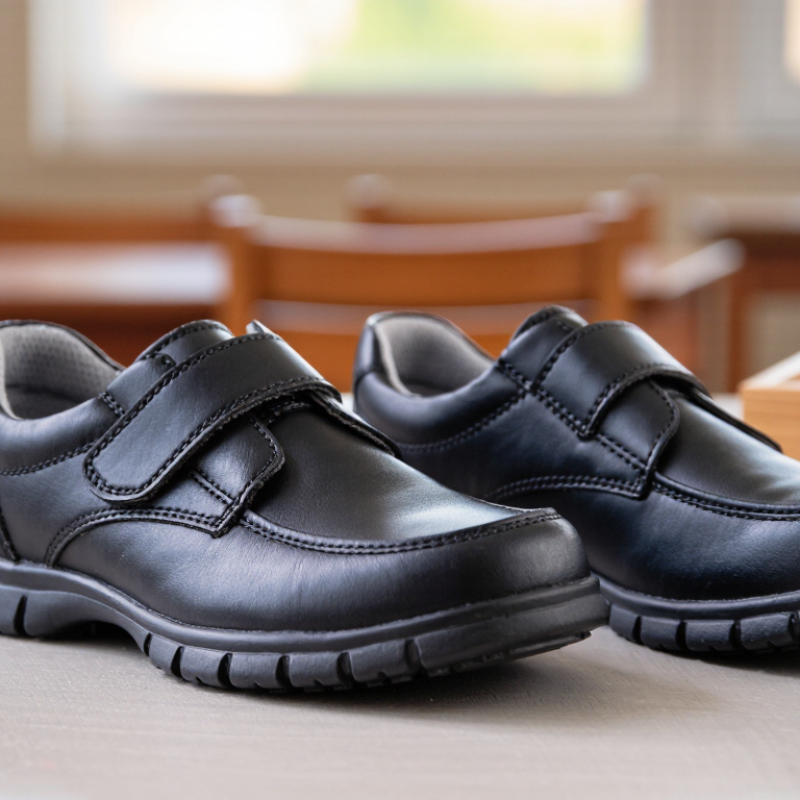
Real leather can soften with wear, but it should not feel stiff or cardboard-like. Look for neat stitching, a firmly attached sole, and a padded collar around the ankle. The outsole should bend near the toes, not beneath the middle of the foot. It also needs reliable grip on wet corridors. Shiny finishes look formal, yet they can reveal scratches quickly. That matters during playground use.

Practical testing exposes weaknesses. Walk, climb stairs, and squat in both shoes before buying. Listen for heel slipping or rubbing. I would not trust appearance alone; a polished shoe may still pinch after twenty minutes. Some children need removable insoles, especially when their feet grow unevenly. Check the school’s uniform rules, because black leather may not mean a particular finish or fastening. Laces can provide a closer fit, while adjustable straps are easier for younger pupils. Clean the uppers with a soft cloth and suitable conditioner, but avoid soaking them. Even a durable pair can fail when repeatedly dried beside a heater.

2026 Best Boys Black Leather Shoes for School? - What Defines the Best Boys’ Black Leather School Shoes in 2026?

A practical comparison of the features, materials, fit and care requirements that help define a high-quality school shoe.

Evaluation Dimension Recommended Specification Why It Matters at School What to Check Before Buying
Upper Material Full-grain or high-quality smooth leather with a uniform black finish. Leather is generally durable, breathable and able to develop a polished appearance when maintained. Look for flexible leather, neat stitching and no visible cracks, peeling or excessive plastic coating.
School-Appropriate Colour Plain black across the upper, sole edge and visible fasteners. A simple black design is more likely to meet uniform requirements and works with formal school clothing. Check the school’s uniform policy for acceptable finishes, logos, coloured stitching and sole colours.
Fit and Toe Shape A secure heel, comfortable width and enough room for the toes to lie naturally without pressure. A well-fitting shoe supports comfortable walking, standing and classroom activities throughout the day. Try shoes with school socks. Check for toe movement, no heel slipping and no tightness over the widest part of the foot.
Fastening System Laces for adjustable support; hook-and-loop straps for children who need faster, independent fastening. A secure fastening helps keep the foot stable and reduces the need to readjust the shoe during the school day. Make sure laces are long enough to tie safely and straps close firmly without restricting the foot.
Outsole Grip A flexible rubber or rubber-like outsole with a clearly defined tread pattern. Tread helps provide traction on common indoor and outdoor school surfaces. Bend the front of the shoe gently. The sole should flex near the forefoot without twisting excessively through the middle.
Weight and Flexibility A lightweight construction that bends at the forefoot while retaining heel support. Lower bulk can make walking, stair use and active breaks more comfortable. Compare both shoes in the same size and avoid rigid soles or unnecessarily heavy internal components.
Interior Comfort Smooth lining, cushioned insole and an internal heel area without rough seams. Comfortable interiors help reduce rubbing and hot spots during extended wear. Run a finger around the heel and toe area to identify hard edges, exposed stitching or uneven padding.
Heel Stability A structured heel counter that holds the heel without feeling stiff or restrictive. Heel stability helps prevent excessive movement inside the shoe during walking and running. Press the heel area lightly. It should offer support and return to shape rather than collapse immediately.
Water and Stain Resistance A suitable leather protector applied according to the manufacturer’s care instructions. Protection can make light rain and everyday marks easier to manage, although it does not make leather fully waterproof. Confirm that the care product is suitable for smooth black leather and test it on a concealed area first.
Construction Quality Even stitching, firmly attached sole, reinforced high-wear areas and clean edge finishing. Solid construction can improve resistance to repeated bending, scuffing and daily school use. Inspect the toe, heel, lace area and sole bond. Avoid gaps, loose threads, uneven glue or detached components.
Breathability Leather upper combined with a moisture-managing lining and breathable socks. Better moisture management can improve comfort during long periods of wear. Check whether the lining feels smooth and whether the insole can be removed for airing when appropriate.
Maintenance Needs Regular brushing, prompt cleaning of marks and occasional black shoe polish or conditioner suitable for leather. Routine care helps preserve appearance and reduces drying, staining and surface cracking. Allow wet shoes to air-dry naturally away from direct heat, and use shoe trees or paper to help retain shape.
Value and Replacement Timing Prioritise fit, comfort and construction over decorative details or the lowest initial price. Children’s feet grow, and school shoes may also wear differently depending on daily activity. Check fit regularly and replace shoes when the upper is damaged, the sole is worn smooth, or the child’s toes touch the front.
Overall selection priority: Choose the correct fit first, followed by secure fastening, flexible grip, comfortable interiors, durable construction and easy-care black leather.

Key Features: Materials, Comfort, Fit, and Everyday Durability

2026 Best Boys Black Leather Shoes for School

Choosing school shoes in 2026 means balancing a neat appearance with daily practicality. Real leather usually softens with wear and can handle regular polishing. Smooth leather also resists light scuffs better than thin synthetic uppers. However, leather is not automatically durable. Weak stitching and a poorly bonded sole can still fail quickly.

Comfort starts with the fit. Measure both feet late in the day, when feet are slightly larger. Leave about one thumb’s width beyond the longest toe. The heel should stay secure without rubbing. A cushioned insole can reduce pressure during long school days. Flexible soles help younger students walk naturally, but very soft soles may wear faster. I have found that a shoe feeling perfect for five minutes can feel tight after an hour. That is why walking indoors matters.

Tips: Wear the socks used at school when trying shoes. Check for pinching near the toes. Bend the shoe gently at the front, not the middle. Look for even stitching, firm heel counters, and textured rubber outsoles. Wipe away dust after use and let damp shoes dry naturally. Avoid placing them beside direct heat. A spare pair can help the leather rest, though this is not always practical for every family. Inspect the sole monthly, especially around the heel.

2026 Best Boys’ Black Leather Shoes for School

Key features assessed: materials, comfort, fit, and everyday durability.

The scores use a transparent 10-point practical rubric rather than brand or company data. Full-grain or coated leather generally offers a smooth, wipe-clean surface; cushioned insoles and flexible outsoles support comfort; a secure heel and adjustable fastening improve fit; and reinforced stitching with a durable rubber outsole helps shoes withstand daily school use. A higher score indicates stronger suitability for everyday wear.

Recommended Shoe Styles for Different School Dress Codes

2026 Best Boys Black Leather Shoes for School

School dress codes should guide the shoe choice, not the latest fashion trend. For a strict uniform, black leather Oxfords are usually the safest option. Their closed lacing and smooth finish look neat with trousers, blazers, and formal socks. A rounded toe gives growing feet more room than a sharply pointed style. Check the school handbook carefully. Some schools allow simple stitching, while others require completely plain uppers.

For a smart-casual code, black Derby shoes offer a practical balance. Their open lacing can suit wider feet and makes daily fitting easier. Choose a firm heel counter, flexible leather, and a slip-resistant rubber sole. Small details matter. The sole should bend near the toes, not under the middle of the foot. For younger boys, polished black loafers may work with shorts or tailored trousers, but they should hold the heel securely. Loose shoes become distracting during long school days.

Comfort comes before a glossy appearance. Measure both feet late in the afternoon, when swelling is more likely. Leave about a thumb’s width in front of the longest toe. Avoid buying oversized shoes for future growth; that often causes slipping and uneven wear. Even reliable advice has limits. A child with flat feet, persistent pain, or unusual gait may need assessment from a qualified foot-care professional. Leather can soften over time, but it cannot fix a poor fit.

How to Choose the Right Size, Sole, Fastening, and Support

2026 Best Boys Black Leather Shoes for School?

Choosing school shoes is less about appearance and more about daily movement. Measure both feet in the afternoon, when swelling is more likely. Leave about 10–12 millimeters of space beyond the longest toe. The heel should stay secure without rubbing. I still get this wrong sometimes by judging fit from the length alone. Check the width, too. A tight toe box can cause discomfort during long lessons and playground walks.

The sole should bend near the toes, not through the middle. Look for steady grip and moderate flexibility on polished floors. A very thin sole may feel light but offer little protection. A heavy sole can make younger children walk awkwardly. Fastening matters as well. Laces provide precise adjustment, while hook-and-loop straps are easier for children who dress independently. Slip-on styles can loosen during running, so inspect heel security carefully. Support should feel firm, never rigid. The shoe must allow natural ankle movement.

Tips: Try shoes with the socks your child wears at school. Ask him to walk, squat, and climb a step. Watch for heel lifting, curled toes, or pressure marks. Check the fit every few months. Children’s feet change quickly. Avoid buying several sizes ahead, even when the price seems attractive. A shoe that fits today is usually safer than one chosen for an uncertain future.

Care, Maintenance, Safety, and Value Considerations for School Shoes

For black leather school shoes, care and safety matter more than a flawless shine. During fitting, measure both feet late in the day. Leave about 10–12 millimeters of space beyond the longest toe. The heel should stay secure without pressure. The American Podiatric Medical Association reported that 77% of surveyed adults had experienced foot pain, though that survey was not school-specific. Poor fit deserves attention early.

Wipe dust with a soft, damp cloth after school. Let wet leather dry naturally. Avoid radiators, hair dryers, and strong solvents. Apply a small amount of neutral conditioner when the surface feels dry. A small crease is not failure. Deep cracks are different. Inspect stitching, eyelets, and outsole edges weekly. Smooth leather does not automatically provide reliable grip. ASTM F2913 describes whole-shoe slip-performance testing, so ask for relevant test information when available. Playground dust can reduce traction quickly.

Value is more than the purchase price. The U.S. Bureau of Labor Statistics’ 2023 Consumer Expenditure data places average household footwear spending at roughly 200 dollars annually, making durability worth examining. Compare outsole wear, repair options, and usable fit, not only appearance. Rotating two pairs can allow moisture to evaporate overnight. I would not promise that every expensive shoe lasts longer. Children grow unpredictably, and a perfectly maintained shoe may still become too small.