10 Best Wall Panels for Home and Office Interiors
Wall Panels are no longer limited to plain office partitions or basic decorative coverings. They now combine acoustic control, thermal performance, moisture resistance, and visual character. Grand View Research identifies renovation, commercial construction, and interior customization as key forces supporting wall panel market growth. Its findings also show rising interest in sustainable materials and engineered surface systems. These trends matter in real rooms, where a panel must look attractive under bright lighting and survive daily contact.
The right choice depends on the space, not only the photograph. A fluted wood panel can soften echoes in a meeting room, while a moisture-resistant PVC panel may suit a busy laundry area. In offices, acoustic ratings and fire classifications deserve careful checking. The U.S. Green Building Council’s LEED resources also emphasize material transparency, responsible sourcing, and indoor environmental quality. Certification does not automatically guarantee a perfect product. Details still matter.
This guide reviews 10 Best Wall Panels for Home and Office Interiors through practical criteria. We consider appearance, installation, durability, maintenance, acoustic value, and environmental information. Some options are impressive. Others have limits. A beautiful panel may scratch easily. A low-cost product may require more frequent replacement. Manufacturer claims should be compared with technical data sheets, warranty terms, and independent testing. That step is often skipped. It should not be. Good design feels effortless, but reliable specification requires patient questions about substrates, adhesives, ventilation, and long-term use.
Wall Panel Types: Wood, MDF, PVC, Metal, Stone, and Acoustic Systems
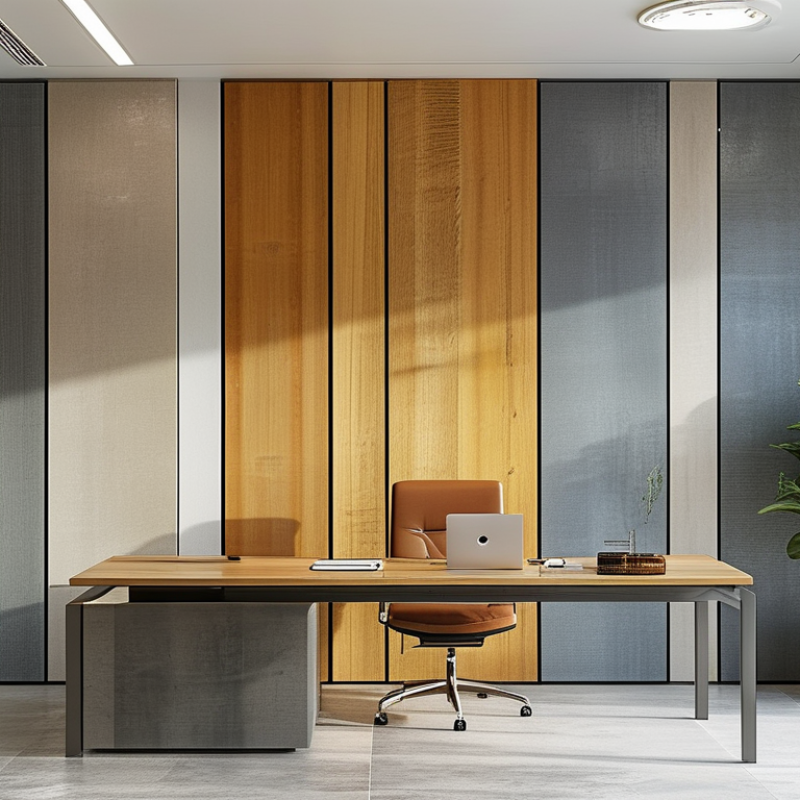
Choosing wall panels starts with the room’s demands, not a fashionable surface. Wood panels add warmth through visible grain and soft brown tones. They suit living rooms, reception areas, and quiet study spaces. MDF panels offer precise grooves and stable shapes, but exposed edges need careful sealing. Moisture can quickly reveal poor preparation.
PVC panels are lightweight and useful in utility rooms or damp areas. Their smooth surfaces wipe clean, although some finishes can feel less natural under strong lighting. Metal panels create a crisp, durable appearance for offices, workshops, and modern kitchens. They may also reflect sound, so placement deserves attention. Stone panels provide visual weight and an irregular texture. Check wall strength before installation, because real stone can be surprisingly heavy.
Acoustic systems serve a different purpose. Their felt, slatted, or perforated surfaces help reduce echoes in meeting rooms and open-plan offices. They work best when paired with sensible furniture placement, not as a single cure for noise. A practical inspection should include wall moisture, panel weight, fixing points, cleaning needs, and indoor air quality. Small samples help reveal color changes near windows.
No panel is perfect. I often reconsider designs that look impressive online but feel too cold in person. A narrow corridor may need lighter colors, while a busy office needs impact resistance more than decoration. Leaving access around sockets and vents also prevents frustrating repairs later.
Evaluation Standards: NRC 0–1.00, ASTM E84 Classes, R-Values, and VOC Limits
Choosing the 10 best wall panels requires more than comparing textures and prices. NRC ratings measure sound absorption from 0 to 1.00. A panel with NRC 0.80 can reduce reflected noise, but room size and installation gaps still matter. I have seen attractive panels perform poorly when mounted over hard, uneven walls. Numbers need context.
ASTM E84 classifications show surface flame-spread and smoke-developed performance. Class A offers the strongest rating, while Classes B and C provide lower performance. These classes do not make a panel fireproof. R-values describe thermal resistance, but the value often changes with thickness and installation quality. A thin decorative panel may offer limited insulation. VOC limits also deserve careful review. Confirm laboratory testing, emissions duration, and compliance with the rules used in your region. Test methods differ, and a certificate is not always easy to interpret.
Tips: Match NRC to the room’s noise problem. Check the complete wall assembly for R-value. Request current VOC documentation. Leave ventilation space when installation instructions require it. Do not assume Class A solves every fire concern. One detail is easy to miss: adhesives, coatings, and backing materials can affect the final result. I would compare the full assembly, not only the front panel. That step takes longer, but it prevents an unreliable choice.
Ten Best Panels Ranked by Durability, Cost, Maintenance, and Design Flexibility
10 Best Wall Panels for Home and Office Interiors
A practical ranking should measure more than appearance. It should consider moisture, impact resistance, cleaning effort, installation cost, and future design changes.
Porcelain panels rank first for durability and water resistance. They suit kitchens, bathrooms, and busy office entrances. Their cost and heavy installation requirements can be demanding.
Natural stone ranks second, offering lasting character and excellent impact resistance. However, sealing and professional handling increase maintenance.
High-quality wood panels rank third for warmth and acoustic comfort. They need stable humidity and careful cleaning. They can also show dents, which some owners may dislike.
Fiber-cement panels rank fourth because they resist moisture, fire, and daily wear. Their texture is useful for modern commercial spaces. Cutting them creates dust, so installers need proper controls.
PVC panels rank fifth for low cost and simple maintenance. They work well in utility rooms, but cheaper surfaces may look artificial.
Acoustic fabric panels rank sixth, improving speech clarity in offices. They collect dust and need thoughtful placement.
Metal panels rank seventh for durability and industrial style. Fingerprints and scratches remain visible on darker finishes.
Glass panels rank eighth, bringing light and a clean appearance. They cost more and require careful cleaning.
Laminate panels rank ninth because they offer many colors at modest prices. Edges may swell after prolonged water exposure.
Peel-and-stick panels rank tenth for quick updates and rental spaces. Adhesion can fail on dusty or uneven walls.
The ranking is not absolute. Installation quality often matters more than the panel itself. A durable material can still disappoint when moisture control is ignored.
Home Applications: Moisture Resistance, Impact Ratings, and Indoor-Air Quality
For home and office interiors, wall panels must do more than improve appearance. Moisture resistance is critical in kitchens, bathrooms, laundry areas, and busy entryways. A sealed face can repel splashes, but exposed edges and joints may absorb water. Those details often fail first. Check water-absorption data, joint requirements, and cleaning limits before installation. A panel suitable for occasional humidity may not withstand constant condensation.
Impact ratings also deserve careful attention. Corridors, classrooms, workshops, and reception areas experience repeated contact from carts, furniture, and bags. A higher impact rating can reduce dents and surface cracking, but it does not make the wall indestructible. The supporting substrate matters too. Poor fixing can cause movement behind a strong panel. That is an easy detail to overlook. Select fasteners and spacing according to tested installation conditions, not appearance alone.
Indoor-air quality depends on the complete wall system. Look for panels with independent emissions testing, low-emitting adhesives, and finishes that do not release strong odors after installation. Ventilation remains important during curing. I would also question vague terms such as “eco-friendly” without technical evidence. Maintenance affects air quality as well; smooth, cleanable surfaces can reduce dust buildup. Still, some heavily textured panels look attractive but make routine cleaning unnecessarily difficult.
10 Best Wall Panels for Home and Office Interiors
Home Applications: Moisture Resistance, Impact Ratings, and Indoor-Air Quality
Indicative material-level comparison using a 1–5 scale, where 5 represents stronger typical performance. Ratings reflect common characteristics of each panel category; actual results vary by product composition, surface finish, installation method, moisture exposure, impact testing, and emissions certification.
Office Applications: NRC Targets, Fire Codes, LEED Credits, and Recycled Content
In office interiors, wall panels should address acoustic, safety, and environmental demands together. Start with the room’s noise profile. Open work areas often need panels with an NRC near 0.70 or higher. Private rooms may require a balanced ceiling-and-wall strategy. NRC is only a laboratory rating. Real performance depends on coverage, gaps, placement, and nearby hard surfaces. A sample wall can reveal problems that a specification misses.
Fire safety cannot be treated as a decorative detail. Select panels with tested flame-spread and smoke-development results matching the occupancy and local code. Ask for current documentation, installation limits, and edge-detail requirements. A panel may pass one test yet fail over a different substrate. That uncomfortable detail matters. Coordinate with the architect, fire consultant, and authority having jurisdiction before approval. Test it first. Keep records in the submittal package.
For LEED-focused projects, verify recycled content by weight and request supplier declarations with product-specific data. Recycled fibers may reduce demand for virgin materials, but they do not prove lower total impact. Check durability, cleaning needs, adhesives, and replacement cycles. A panel that looks sustainable may become waste if it stains easily or cannot be repaired. Numbers can mislead. Measure the installed area, acoustic target, fire classification, and maintenance plan together.