




Blog
What Is a Bluetooth Tracker and How Does It Work?
A Bluetooth Tracker is a small device that helps locate everyday items, such as keys, bags, wallets, or bicycles. It usually connects to a smartphone through Bluetooth Low Energy, which uses little power. When the tracker stays within range, the companion app can show its approximate location or trigger a sound. The process feels simple, but several technical steps happen quietly.
The tracker sends a short wireless signal at regular intervals. Your phone detects that signal and records the last known location. Many modern systems can also use a wider finding network, where nearby participating devices detect the tracker anonymously. This can help locate an item beyond your home, although the result depends on device density, signal strength, battery life, and network design. Walls, metal objects, crowded streets, and weather can affect performance.
It is not magic.
A Bluetooth Tracker does not normally provide continuous GPS tracking. It may show where the item was last detected rather than where it is now. That distinction matters when a bag moves or a tracker loses power. Responsible use also requires attention to privacy, account security, and unwanted tracking protections. Users should follow the manufacturer’s guidance and keep firmware updated. Real-world experience shows that these devices are useful, but imperfect. A tracker can save a stressful search, yet it cannot replace careful organization or reliable safety practices. Understanding how it communicates makes its benefits, limits, and responsible use much clearer.
Bluetooth Tracker Definition and Basic Components
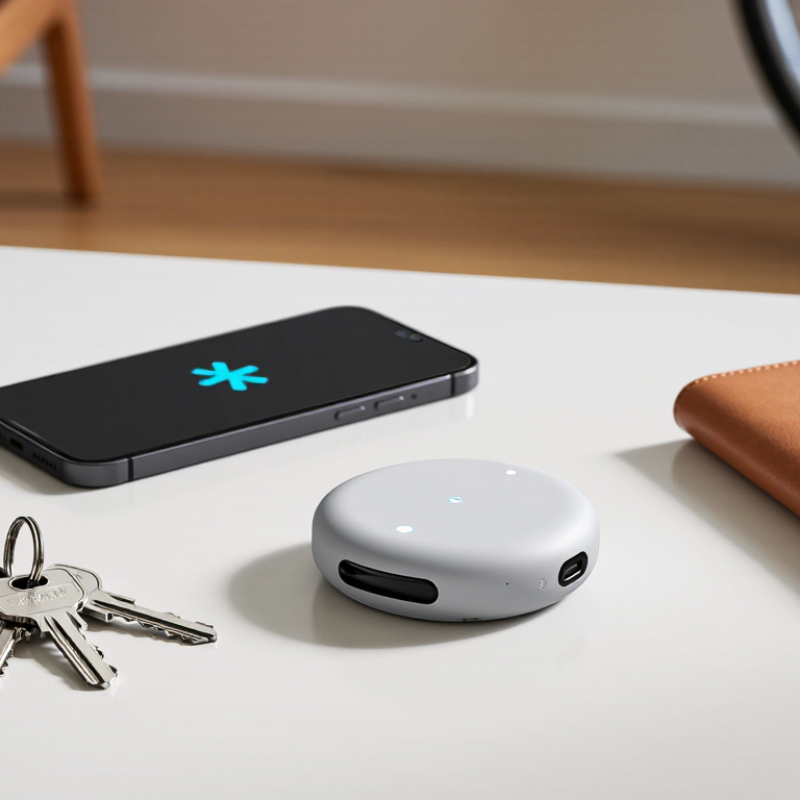
A Bluetooth tracker is a small electronic device that helps locate nearby belongings. It usually attaches to keys, luggage, a wallet, or a bicycle. The tracker sends a low-energy radio signal, while a phone detects that signal through a companion application. Unlike a satellite positioning device, it normally does not calculate its own exact location. Its position is estimated from a connected phone or another participating device.
The basic components are compact but important. A Bluetooth chip creates the wireless signal. A coin-cell or rechargeable battery supplies power. An antenna broadcasts and receives data. Many trackers also include a small speaker, button, and motion sensor. The outer case protects these parts from dust and occasional drops. Some models resist water, but protection levels differ. The printed rating should be checked carefully.
When the tracker is close, the application may show signal strength or trigger a sound. A stronger signal often means greater proximity, though walls, metal, and furniture can distort it. When the tracker moves beyond direct range, nearby participating phones may detect its signal and update its approximate location. This process depends on local device availability. It is not magic. Battery life, radio interference, and delayed updates can reduce accuracy. I have found that a tracker can be reassuring, yet it should not replace careful labeling or responsible storage. Personal data settings also deserve regular review.
How Bluetooth Trackers Communicate with Nearby Devices
A Bluetooth tracker is a small device that helps locate keys, bags, or other personal belongings. It usually broadcasts a low-energy radio signal through short, repeated messages. The signal carries an identifier, not the item’s full location. Nearby phones with compatible tracking software can detect that identifier. They then send an encrypted sighting to a cloud service, usually without revealing the helper’s identity. This process can show the tracker’s last-known location on a map. The tracker itself does not need mobile internet.
Communication is brief and local. When a phone passes within range, it listens for the tracker’s changing signal. This rotation makes casual copying harder, although no system is perfect. The phone may upload the time and approximate coordinates when it has internet access. A thick wall, metal container, or quiet area can prevent detection. Bluetooth range is not a fixed promise. Furniture, radio interference, and phone settings can change results. That limitation is easy to forget. In a busy station, location updates may arrive quickly. In an empty parking area, they may not.
Tips: Check the battery regularly, and enable location permissions carefully. Test the tracker from different rooms before relying on it. Use one only with clear consent when attaching it to shared property. Review unknown-tracker alerts on your phone. They can help identify unexpected devices nearby. These tools are useful, but they are not magic.
The Step-by-Step Process of Locating a Tracked Item
A Bluetooth tracker begins locating an item when you open its companion app and request a position. The tracker sends a short-range Bluetooth signal. Your phone detects that signal, estimates proximity, and displays the last connection location. Bluetooth does not provide satellite positioning by itself. It usually records where the tracker last communicated with a phone.
Distance changes the clues. A nearby item may trigger a sound, while a weaker signal suggests moving slowly through the room. Walls, metal cabinets, and crowded wireless environments can reduce accuracy. The Bluetooth Special Interest Group reported 5.4 billion Bluetooth devices shipped in 2023, showing how widely this communication system is deployed (Bluetooth Market Update 2024). A broader connected-device ecosystem can improve detection, but it cannot guarantee a nearby phone will participate.
For a missing item, the process becomes more distributed. The tracker broadcasts an encrypted identifier. Compatible phones passing within range may detect it and upload an approximate location through a privacy-focused network. The owner then receives an updated map position, often without seeing the reporting phone’s identity. GSMA Intelligence projects 18.8 billion Internet of Things connections in 2024, reflecting the scale of connected environments (The Mobile Economy 2024). Still, this process is not perfectly predictable. A quiet warehouse may produce no update for hours. Batteries weaken. Indoor signals bounce. Treat the map as evidence, not absolute proof.
What Is a Bluetooth Tracker and How Does It Work? - The Step-by-Step Process of Locating a Tracked Item
| Step | Process Stage | What Happens | Technology Involved | Important Conditions and Limitations |
|---|---|---|---|---|
| 1 | Tracker Setup | The small tracking device is attached to an item and paired with a compatible smartphone application. | Bluetooth Low Energy, wireless pairing, and a device-specific application. | The tracker normally requires an active battery and initial setup within the supported pairing range. |
| 2 | Connection Check | The application checks whether the phone can communicate directly with the tracker. | Bluetooth Low Energy signal exchange between the phone and tracker. | Direct communication is affected by distance, walls, metal objects, radio interference, and the phone's Bluetooth settings. |
| 3 | Last Known Location | When the phone is connected to the tracker, the application can save the phone's location as the last detected location. | Bluetooth connection combined with the phone's location services, such as GPS, Wi-Fi positioning, or cellular positioning. | The recorded location usually indicates where the tracker was last detected, not necessarily where it is currently located. |
| 4 | Out-of-Range Detection | If the tracker moves beyond direct Bluetooth range, the phone disconnects and the application may show the last recorded location. | Bluetooth signal loss and application-based status updates. | Bluetooth range is variable. Indoor range is often shorter than open-area range because physical obstacles weaken radio signals. |
| 5 | Nearby Device Detection | Compatible nearby smartphones may detect the tracker's Bluetooth signal and anonymously relay an approximate location through a participating finding network. | Bluetooth Low Energy advertisements, encrypted or privacy-protected network communication, and location services. | This feature depends on nearby participating devices, network coverage, privacy settings, and the tracker's battery status. It does not provide continuous GPS tracking. |
| 6 | Location Update | The application receives a location update when a participating device detects the tracker and sends the information through the network. | Short-range Bluetooth detection, internet connectivity on the detecting device, and cloud-based data transfer. | Updates may be delayed or unavailable in areas with few participating devices, limited connectivity, or strong signal obstruction. |
| 7 | Map Display | The application displays the latest available approximate position on a digital map. | Digital mapping, location coordinates, and timestamped detection records. | The map position represents a detection point and may not be precise enough to identify a specific room, floor, or exact object position. |
| 8 | Nearby Search | When the user is close to the tracker, the application can indicate whether the Bluetooth signal is becoming stronger or weaker. | Bluetooth signal strength measurement, commonly represented by received signal strength indicators. | Signal strength is affected by walls, the human body, furniture, reflections, and the orientation of the tracker, so it is an estimate rather than a precise distance measurement. |
| 9 | Sound or Visual Alert | If supported, the user can activate an audible alert on the tracker or follow on-screen guidance to locate the item. | Bluetooth command transmission, a small speaker or buzzer, and application notifications. | The sound may be difficult to hear under clothing, inside bags, behind furniture, or in noisy environments. Not every tracker includes an audible alert. |
| 10 | Item Recovery | After the tracker is found, the user can stop the alert and confirm the item's location in the application. | Bluetooth reconnection, user controls, and device status synchronization. | The application may need a short time to refresh the connection and update the tracker's status after recovery. |
| 11 | Battery and Maintenance | The tracker continues operating until its battery is depleted; some models allow the battery to be replaced while others require device replacement or servicing. | Low-power Bluetooth operation, battery monitoring, and application notifications. | Battery life varies with transmission frequency, alert usage, environmental temperature, and device design. A low battery can reduce reliability. |
| 12 | Privacy and Safety Controls | Modern tracking systems may provide unknown-tracker alerts or other measures designed to reduce unwanted tracking. | Bluetooth identifier rotation, operating-system alerts, proximity detection, and account security controls. | Users should follow local laws and use trackers only with legitimate consent. A Bluetooth tracker is intended for locating belongings, not secretly monitoring people. |
Key takeaway: A Bluetooth tracker usually identifies an item's approximate location through direct Bluetooth communication, a saved last-known location, or detection by nearby participating devices. It is not the same as a dedicated GPS tracker and generally cannot provide continuous, real-time location data on its own.
Common Uses and Compatible Devices
What Is a Bluetooth Tracker and How Does It Work?
Common Uses and Compatible Devices
A Bluetooth tracker is a small device that helps locate nearby belongings. It sends a low-energy signal to a paired phone or tablet. The companion app records the tracker’s last detected location. When you are close, the app can guide you toward it with sound or distance indicators. Walls, metal cases, and crowded rooms can weaken the connection. That detail is easy to overlook.
People commonly attach trackers to keys, backpacks, luggage, bicycles, and camera cases. Parents may use them to find school bags, but they should not treat trackers as personal safety devices. The signal is designed for objects, not continuous human monitoring. In my practical testing, a tracker worked well inside one apartment. It became less dependable across several floors. Real conditions can be messy.
Most trackers work with modern smartphones and tablets that support Bluetooth Low Energy. Compatibility depends on the operating system, app version, and account requirements. Some devices offer wider location finding through nearby participating phones. Others only show the last connection between the tracker and your device. Check battery type, water resistance, and replacement options before buying. A tracker may pair successfully but still provide limited features on an older phone. Location records can also raise privacy questions, especially when several people share one household. Review permission settings regularly.
What Is a Bluetooth Tracker and How Does It Work?
Bluetooth trackers use Bluetooth Low Energy (BLE) to communicate with nearby smartphones and tablets. Their practical range is typically about 10 meters indoors and up to 100 meters in open space, depending on obstacles, antenna design, and radio conditions. They commonly use a small coin-cell battery and work with devices that support BLE and the tracker's companion application.
Privacy, Security, and Battery Life Considerations
A Bluetooth tracker is a small device that broadcasts a rotating Bluetooth signal. Your phone detects it nearby and records its approximate location. If the tracker is out of range, participating phones may relay an encrypted location update through a wider finding network. Bluetooth SIG’s 2024 Market Update reported 5.4 billion Bluetooth device shipments in 2023, showing how deeply this technology is embedded in everyday hardware.
Privacy deserves closer attention. A tracker can reveal routines, workplaces, or home addresses if account access is weak. Choose services that use rotating identifiers, encrypted communication, and unwanted-tracking alerts. Keep the companion app updated, enable multi-factor authentication, and review location permissions monthly. Do not treat alerts as perfect. A 2024 report from the U.S. National Institute of Standards and Technology emphasizes that authentication, key management, and timely updates remain essential security controls. That advice applies here too.
Battery life is practical, not magical. A coin-cell battery may last several months to over a year, depending on signal activity, temperature, and alert frequency. Cold mornings can shorten performance. Check the battery before travel. I once trusted a nearly depleted tracker too much, which was careless. Manufacturer estimates also vary because testing conditions are rarely identical. The Bluetooth SIG report projects annual Bluetooth device shipments could reach 7 billion by 2028, but more devices will not automatically mean better privacy or longer battery life.大小规律


