How to Choose the Best Trampoline Mat for Your Needs
Choosing the right Trampoline Mat is about more than finding a piece of fabric that fits. The mat must match the frame, spring layout, and intended use. A few centimetres of mismatch can leave uneven tension, while worn stitching or fading may signal material fatigue. Small details matter.
The U.S. Consumer Product Safety Commission’s injury surveillance estimated about 100,000 trampoline-related emergency-room visits in 2018. That figure covers trampoline injuries, not mat failures alone, so it should not be read as proof that a replacement mat prevents injury. Still, it makes careful product selection worthwhile. ASTM International’s trampoline safety standard, F381, also provides a useful reference for understanding safety-related design and performance requirements.
Pediatric injury-prevention specialist Dr. Gary Smith has warned, “Trampolines are not safe for children to use at home.” That caution concerns trampoline use broadly; it is not a claim about one mat or material. When comparing mats, check the manufacturer’s model compatibility, UV-resistance information, stitching, warranty, and replacement guidance. Measure the frame and count the springs rather than trusting a listing photo. It is easy to assume that “universal fit” means truly universal. It may not. This guide will help you weigh fit, durability, safety features, and budget, while keeping one limitation in view: a sound-looking mat cannot certify the whole trampoline.
Trampoline Mat Types and Their Core Functions
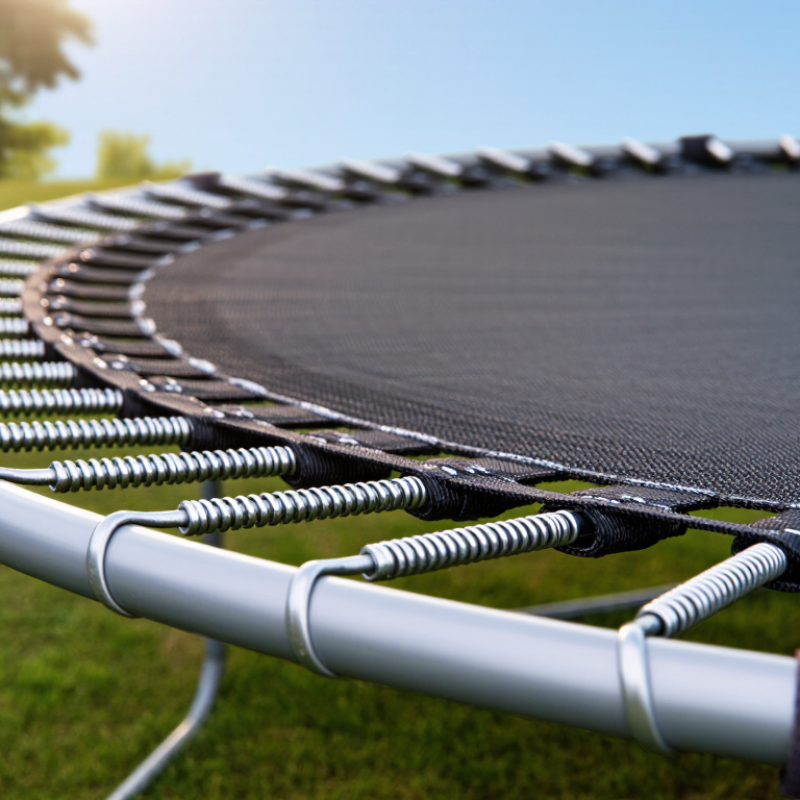
A trampoline mat is more than a jumping surface: its weave, attachment points, and fit affect how force moves through the frame. Woven polypropylene mats are common on outdoor, spring-based trampolines. Their open mesh drains rain, while UV-stabilized fibers can better withstand sunlight. Check the stitching around each V-ring; frayed thread or bent rings can weaken the connection. Small details matter.
Springless designs use mats connected to flexible rods or fabric systems rather than exposed metal springs. Their mats must match the frame and attachment layout exactly. Mini rebounders often use compact fabric beds with elastic bands or short springs, designed for controlled, lower-impact bouncing. These types are not interchangeable. A mat that looks right may still have the wrong diameter, ring count, or tension.
The U.S. Consumer Product Safety Commission’s 2014 NEISS estimate recorded 104,691 trampoline injuries treated in emergency departments. That figure covers trampoline injuries generally; it does not show how many involved mat failure. Still, it’s a useful reminder to inspect the whole system, not just the fabric. Feel for loose edges, uneven tension, and worn seams. I find mat labels easy to overlook, but matching the exact frame dimensions is essential.
Measuring Your Frame and Matching Spring Specifications
Measure the frame before ordering a replacement mat. Use a tape measure across the metal frame through its center, then repeat at a right angle. Compare the readings; older frames may be slightly out of round. Record the outside diameter, but do not assume the mat should match it exactly. Its edge must reach the frame’s spring anchors under tension. A close guess can leave the mat slack or make installation difficult.
Count every spring position around the frame, not just the springs still attached. Missing springs can disguise the original spacing. Check the mat’s number of V-rings against that count, and compare their layout. Then measure several springs from hook tip to hook tip while they are relaxed. Spring length affects how far the mat sits from the frame, so matching the count alone is not enough. Small details matter. I’ve found that rushed measurements are easy to misread, especially when the tape bends around a frame. Measure twice, and check the product’s stated frame size and spring specifications before buying. If your measurements disagree, pause and recheck rather than forcing a near match.
Comparing Materials, Stitching, and UV Resistance
A trampoline mat must match the frame and spring layout; even strong fabric can sag if the dimensions are wrong. Woven polypropylene is common because it is light and allows air to pass through. Check the stated weight limit and intended exposure before choosing. Feel the edge binding, too. A rough, thin finish may wear faster where springs pull on the mat.
Stitching deserves a close look. Several even rows around the spring attachments can spread tension more reliably than one loose row. Inspect the underside, where weak seams may be less obvious. No loose loops. Still, stitch count alone is not proof of strength: thread quality, seam spacing, and reinforced edges matter as well. I would treat unusually bold claims cautiously unless the maker provides clear testing details.
For outdoor use, look for specific information about UV resistance, not just “weather-resistant” wording. Sunlight can weaken fibers over time, even when the mat still looks acceptable. A faded patch near one edge may signal uneven exposure, though appearance alone cannot confirm the fabric’s condition. Shade helps, but it does not replace proper care. Check seams and attachment points regularly, especially after a windy season. The details are easy to overlook.
Evaluating Safety, Durability, and Intended Use
A trampoline mat should match the frame’s size, spring count, and attachment style. Measure the frame rather than guessing from the old mat. Even a small mismatch can leave gaps or strain the springs. Check the stated weight limit, too; it matters for both casual bouncing and exercise routines. Inspect stitching and attachment points closely. Fraying, loose loops, or uneven seams are warning signs, not cosmetic flaws.
Durability depends on materials and exposure. A mat used outdoors faces sun, rain, and temperature changes, which can weaken fabric over time. UV-resistant material may help, but it does not make a mat weatherproof. Look for reinforced seams and clear care instructions. Store the mat dry when possible. That can be inconvenient, and I would not pretend every family has space for that.
Intended use changes what “best” means. Children’s recreational bouncing calls for a correctly fitted mat and close adult supervision. Fitness use may demand a firmer surface that responds consistently to repeated, controlled jumps. Before buying, compare the mat’s specifications with your trampoline model and inspect the existing frame and springs. A new mat cannot fix a bent frame or damaged springs. Check for wear regularly, especially after heavy use or harsh weather.
How to Choose the Best Trampoline Mat for Your Needs
Compare the key considerations for safety, durability, and intended use.
Safety and exact fit should come first: match the mat’s shape, frame diameter, spring count, and attachment layout to your trampoline. For longer outdoor use, consider UV-resistant, weather-suitable materials and inspect the mat regularly. The scores show relative selection priorities, not laboratory test results.
Choosing a Mat and Planning for Installation and Care
Choosing a replacement trampoline mat starts with an exact frame measurement, not a guess based on the trampoline’s advertised size. Measure the frame diameter and count the springs; mats with similar dimensions may use different spring layouts. Check the mat’s stated weight limit and material details, including UV resistance and reinforced stitching. Sun exposure can weaken fabric over time, even when the surface still looks sound. A low price is tempting, but poor fit can create uneven tension and unsafe gaps.
Tips: Lay the old mat flat and count every spring attachment. Compare those details with the replacement specifications. When measurements seem unclear, pause and ask the seller or a qualified installer; guessing is not worth it.
Before installation, inspect the frame, springs, and padding for rust, cracks, or stretched parts. Replace damaged components rather than fitting a new mat onto a questionable frame. Follow the supplied instructions, attach springs evenly, and keep hands clear of tensioned hooks. I would not rush this step; it is easy to lose track of spring positions. For care, remove leaves and standing water, check seams regularly, and avoid sharp objects or footwear on the mat. Store the mat dry if it must be removed for an extended period.