





Blog

How to Choose the Right Carbide Furnace for Your Needs?

Choosing the right Carbide Furnace begins with the material, not the equipment brochure. Calcium carbide, silicon carbide, and other carbide products require different temperatures, atmospheres, residence times, and electrode systems. A furnace designed for one process may waste energy or damage product quality in another. The details matter: charge size, feed moisture, tapping frequency, furnace pressure, and cooling conditions can change operating results significantly.

Energy performance deserves close attention. The International Energy Agency’s Energy Technology Perspectives 2024 identifies heavy industry as a major energy consumer and highlights electrification, efficiency, and process integration as important decarbonization pathways. The U.S. Department of Energy’s Industrial Decarbonization Roadmap also emphasizes improved thermal systems and better process control. These findings are highly relevant to carbide production, where electricity demand, electrode consumption, and heat losses directly influence operating costs. A small efficiency difference can become substantial across thousands of operating hours.

A reliable selection process should compare rated capacity, transformer configuration, furnace geometry, automation, maintenance access, emissions control, and local grid conditions. It should also examine real operating references, not only laboratory figures. The European Commission’s Best Available Techniques Reference Document for Non-Ferrous Metals Industries stresses the value of monitoring, heat recovery, and controlled emissions in energy-intensive plants. Still, no single design fits every site. That assumption often fails. Engineers should test supplier data against feedstock behavior, production targets, safety requirements, and future expansion plans. This guide explains how to make that comparison with practical evidence and fewer expensive surprises.
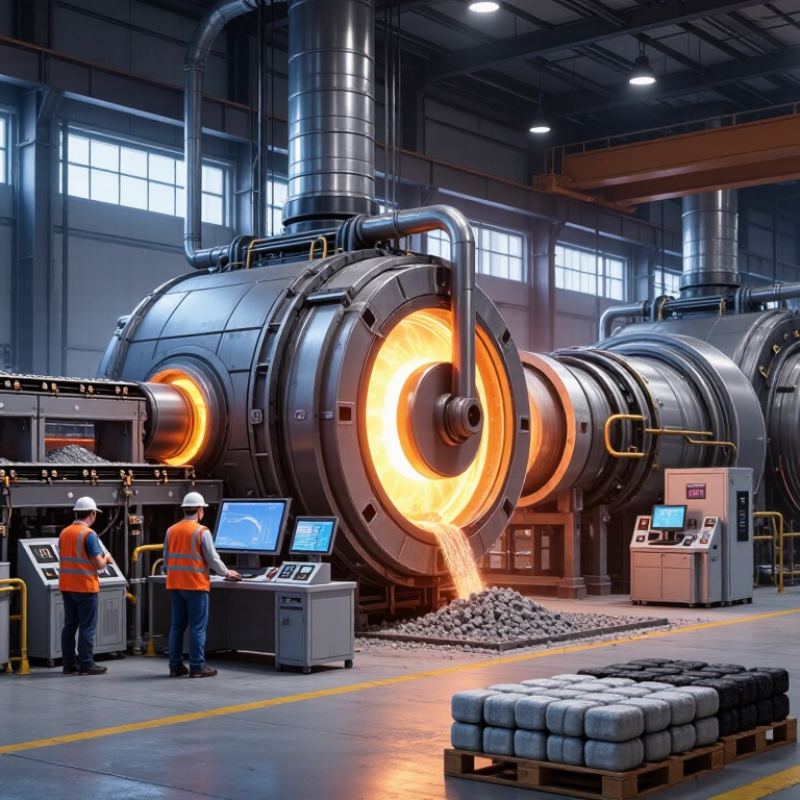
How to Choose the Right Carbide Furnace for Your Needs?

Understanding Carbide Furnaces and Their Industrial Applications

How to Choose the Right Carbide Furnace for Your Needs?

Understanding carbide furnaces begins with identifying the material and production purpose. A calcium carbide furnace uses a submerged electric arc to react lime with carbon at extremely high temperatures. The resulting carbide may support acetylene production, steel desulfurization, or chemical manufacturing. Silicon carbide furnaces follow different process conditions, so confusing these systems can create costly design problems.

Capacity matters, but larger is not always better. Match furnace output with raw material supply, cooling capacity, electrode performance, and downstream handling. A stable three-phase power system is essential. Operators should also examine furnace lining quality, tapping design, dust collection, and off-gas control. These details affect product consistency and worker safety. Small gaps become expensive.

Experienced plant engineers usually review energy use per tonne, electrode consumption, maintenance access, and control-system response. A furnace that looks efficient on paper may perform poorly with variable feed moisture or uneven particle size. Site conditions also matter. Limited floor space, weak infrastructure, and difficult material transport can change the best choice. I would leave room for uncertainty during testing, because laboratory results rarely mirror continuous production perfectly. Reliable suppliers should provide process data, inspection records, operating limits, and practical training without hiding inconvenient figures. Specification sheets help. They are not enough.

Identifying Your Material, Capacity, and Processing Requirements

How to Choose the Right Carbide Furnace for Your Needs?

Identifying Your Material, Capacity, and Processing Requirements

Choosing a carbide furnace begins with identifying the material, not the advertised maximum temperature. Cemented carbide grades can respond differently to heat, atmosphere, and binder removal. Review the powder composition, binder content, part dimensions, and required final properties. Small test loads can reveal distortion, cracking, or uneven shrinkage before a full production run.

Capacity should match both the batch weight and the physical arrangement of parts. Measure the usable hot-zone dimensions carefully. A chamber may look spacious, yet fixtures and protective spacing reduce its working volume. Leave room for gas circulation. Overloading can create temperature differences between the center and the walls. That problem is easy to miss.

Processing requirements determine the furnace design. Check the complete heating cycle, including debinding, sintering, cooling, vacuum level, and protective gas control. Confirm temperature uniformity at the actual working range, not only at the rated limit. Data logging and calibration records support repeatable production and credible quality checks. I have seen neat calculations fail when real fixtures changed airflow. That deserves attention. Ask for trial data using similar materials and loading patterns. A furnace that meets a specification sheet may still perform poorly in your process. Allow space for future batch growth, but avoid buying capacity that your facility cannot heat, monitor, or maintain consistently.

How to Choose the Right Carbide Furnace for Your Needs? - Identifying Your Material, Capacity, and Processing Requirements

Material or Product Typical Thermal Range Required Atmosphere Typical Capacity Suitable Furnace Configuration Important Processing Requirements Recommended Selection Focus
Calcium carbide production charge
Lime and carbonaceous reducing materials
Approximately 1,800–2,200°C in the reaction zone Sealed operation with a carbon monoxide-rich off-gas environment; air ingress must be minimized Continuous operation; pilot units may use approximately 1–10 MW, while larger production units commonly require substantially higher power Submerged electric arc furnace with graphite or carbon electrodes Stable electrode control, uniform charge feeding, high-temperature refractory protection, off-gas collection, and safe handling of hot carbide Electrical power, electrode arrangement, feed uniformity, gas-tight construction, cooling system, and environmental controls
Cemented tungsten carbide green compacts
Tungsten carbide with cobalt or another metallic binder
Debinding commonly occurs below approximately 600°C; liquid-phase sintering is typically around 1,350–1,500°C Vacuum, hydrogen, or a controlled inert/reducing atmosphere, depending on the binder system and process recipe Laboratory: less than 1–10 kg per batch
Production: approximately 10–200 kg per batch is common for many furnace designs
Vacuum sinter-debinding furnace with graphite heating elements and controlled cooling Slow debinding, precise temperature ramps, carbon-potential control, vacuum management, and prevention of distortion or binder loss Usable hot-zone volume, temperature uniformity, vacuum performance, gas-flow control, and recipe repeatability
Carbide injection-molded parts
Feedstock containing carbide powder, binder, and molding additives
Binder removal may require staged heating from approximately 200–600°C; final sintering is commonly around 1,350–1,500°C Inert or hydrogen-containing debinding atmosphere followed by vacuum or a controlled sintering atmosphere Usually selected by part count and fixture volume; small to medium batch systems are commonly used Integrated catalytic, thermal, or solvent-assisted debinding and vacuum sintering system Very low heating rates during binder removal, controlled exhaust, support for delicate geometries, and accurate shrinkage compensation Debinding capability, exhaust-treatment capacity, programmable ramp control, fixture design, and low-temperature uniformity
Large or thick cemented-carbide components
Dies, wear parts, rolls, and heavy engineering components
Typically approximately 1,350–1,500°C for sintering, with extended heating and cooling cycles Vacuum or controlled hydrogen/inert atmosphere, selected according to binder chemistry and carbon balance Often approximately 50–500 kg per batch; actual capacity depends on part dimensions and fixture loading Large-volume vacuum sintering furnace with multi-zone heating and controlled cooling Low thermal gradients, adequate gas circulation, robust support fixtures, controlled shrinkage, and protection against cracking Effective hot-zone dimensions, temperature uniformity, cooling rate, load distribution, and dimensional repeatability
Carbide powders and presintered materials
Tungsten carbide, titanium carbide, tantalum carbide, or blended powders
Common heat-treatment requirements range from approximately 800–1,600°C, depending on the intended reaction or conditioning step Vacuum, argon, nitrogen, hydrogen, or another controlled atmosphere selected to prevent oxidation or unwanted reactions Laboratory units may process grams to several kilograms; production systems may process tens to hundreds of kilograms Vacuum tube furnace, batch furnace, rotary furnace, or continuous pusher furnace Powder containment, contamination control, atmosphere purity, uniform gas distribution, and prevention of powder carryover Atmosphere flexibility, chamber cleanliness, powder-handling design, temperature uniformity, and ease of cleaning
Carbide coating or diffusion-treatment workpieces
Metal substrates requiring carbide formation or surface treatment
Often approximately 700–1,200°C, depending on coating chemistry, substrate, and treatment method Vacuum, inert gas, hydrogen, or a reactive gas mixture with carefully controlled composition Batch capacity is determined primarily by workpiece surface area, fixture spacing, and treatment time Vacuum heat-treatment furnace, controlled-atmosphere chamber furnace, or specialized reaction furnace Uniform gas exposure, substrate protection, accurate pressure control, controlled heating and cooling, and contamination prevention Gas-flow uniformity, pressure range, fixture design, process monitoring, and compatibility with the substrate material
Research, development, and pilot-scale carbide processing
New formulations, small components, and process validation
Commonly up to approximately 1,600°C for sintering studies; higher temperatures may be required for specialized reactions Flexible vacuum, argon, nitrogen, hydrogen, or mixed-gas operation Approximately 0.1–10 kg per batch, depending on the chamber and heating zone Compact programmable vacuum or controlled-atmosphere furnace with interchangeable fixtures Fast recipe development, accurate data logging, easy sample loading, safe gas management, and repeatable small-batch results Temperature accuracy, atmosphere flexibility, data acquisition, changeover time, and operating cost
High-throughput carbide component production
Repeated batches with stable product geometry and composition
Usually approximately 1,350–1,500°C for cemented-carbide sintering, subject to material formulation Automated vacuum and controlled-gas cycles with recipe-based carbon and pressure management Commonly approximately 100–500 kg per batch or multiple batches per day, depending on furnace size and cycle time Automated multi-zone vacuum sinter-debinding furnace with programmable loading and cooling High uptime, consistent thermal profiles, automated alarm handling, preventive maintenance access, and traceable process records Throughput per cycle, cycle duration, energy consumption, maintenance interval, automation level, and total cost of ownership

Typical ranges are general engineering guidelines. The final furnace specification should be confirmed using the material composition, binder system, part geometry, target density, carbon balance, loading pattern, required throughput, and applicable safety requirements.

Comparing Furnace Types, Heating Methods, and Temperature Ranges

Choosing a carbide furnace starts with the material, part size, and production rhythm.

Batch vacuum furnaces suit varied tool shapes and smaller production runs.

Continuous furnaces support stable, high-volume output, but require consistent loading and powder preparation.

Pressure-assisted furnaces can reduce porosity when demanding mechanical performance matters.

Heating method changes temperature uniformity and operating cost.

Graphite resistance heating is widely used because it provides controlled heat across the work zone.

Induction heating responds quickly, yet complex loads may develop uneven temperature profiles.

For cemented carbide, sintering commonly occurs around 1,350–1,550°C, depending on composition and process design.

Debinding usually needs a much lower, carefully controlled range.

Rushing this stage can create cracks or trapped gases. It happens.

Tips:

Compare the furnace’s useful zone, not only its advertised capacity.

Ask for uniformity data at your actual load pattern.

Check atmosphere control, vacuum performance, cooling speed, and thermocouple placement.

Record shrinkage and density during trial runs.

A furnace reaching the target temperature is not enough; it must hold that temperature evenly.

In practice, small calibration differences can affect edge quality and final dimensions.

Leave room for testing.

Evaluating Energy Efficiency, Safety Features, and Operating Costs

How to Choose the Right Carbide Furnace for Your Needs?

Energy efficiency should be measured by usable heat, not headline power ratings. The U.S. Department of Energy reports that process heating represents about 51% of manufacturing energy use. This makes insulation, temperature uniformity, and recovery time financially important. Ask suppliers for measured kWh per kilogram, not estimated figures. Compare results under your actual carbide load, batch size, and production schedule. A furnace that heats quickly may still waste energy during idle periods. That detail is easy to miss.

Safety features deserve equal attention.

NFPA 86 emphasizes protective controls for industrial ovens and furnaces, including interlocks, flame supervision, emergency shutdowns, and ventilation. Choose systems that prevent heating when doors, cooling circuits, or gas controls are unsafe. Verify over-temperature protection independently from the main controller. Operators also need clear lockout procedures and practical maintenance access. OSHA’s control-of-hazardous-energy requirements support this approach. They are not optional paperwork. They protect real people near hot chambers and stored energy.

Operating cost includes electricity, gases, electrode wear, maintenance, and unplanned downtime.

The International Energy Agency’s Energy Efficiency 2023 report identifies industry as a major global energy consumer, reinforcing the value of accurate monitoring. Request service intervals and replacement costs before purchasing. Then calculate cost per acceptable kilogram over several years. My experience is that the cheapest quotation can become expensive after installation. Still, projections remain imperfect. Test a representative load before making the final decision.

Selecting a Reliable Carbide Furnace Supplier and Configuration

Choosing a reliable carbide furnace supplier requires more than comparing quoted prices. IEA’s Energy Efficiency 2023 report states that industry consumes about 37% of global final energy. This makes furnace efficiency a production issue, not merely an environmental preference. Ask suppliers to provide verified energy use per tonne, electrode consumption, rated capacity, and expected output under your raw-material conditions. Request operating references from facilities with similar feed size and production targets.

Configuration should match your actual process. Review furnace diameter, transformer capacity, electrode arrangement, cooling design, refractory construction, sealing, and dust-control interfaces. The supplier should explain how each choice affects power stability and maintenance access. ISO 13577 provides a useful safety framework for industrial furnaces, including protective systems and combustion-related risks. For electric carbide furnaces, independent electrical and mechanical inspections remain important. Do not accept a polished brochure as proof.

Small details matter. Ask for factory acceptance testing, control-system records, spare-parts lead times, and a clear performance guarantee. A dependable supplier will disclose assumptions, exclusions, and failure limits. Site visits can reveal practical weaknesses, such as cramped electrode-maintenance areas or poorly protected cable routes. I have found that energy figures often look better on paper than during unstable feeding. That deserves honest discussion. A strong contract should define test methods, warranty conditions, training, commissioning support, and remedies for missed performance. The cheapest configuration may become expensive when downtime, refractory replacement, and unplanned electrical work are included.

How to Choose the Right Carbide Furnace for Your Needs?

Select a furnace configuration that can safely exceed the required processing temperature of the target carbide material. The chart below shows approximate thermal reference points for commonly processed carbides; actual furnace selection also depends on atmosphere, pressure, batch size, heating rate, and energy efficiency.

Supplier checklist: Verify temperature uniformity, refractory compatibility, power-control accuracy, safety systems, maintenance support, spare-parts availability, and documented performance testing before selecting a supplier.