



Blog

China Top 10 Air Mist Humidifier Manufacturers

China’s air mist humidifier industry spans compact bedside units, ultrasonic models, and larger systems for homes and commercial spaces. A useful comparison looks beyond factory scale. Buyers should examine output consistency, tank design, noise, cleaning access, material quality, and after-sales support. A smooth showroom display tells only part of the story.

Indoor-air-quality researcher Dr. Jeffrey Siegel’s work offers a useful reminder: indoor air depends on interacting factors, not one appliance alone. This is a paraphrase of his broader research, not a verbatim quotation. Humidity settings, room size, ventilation, and regular cleaning all affect real-world performance. A neglected tank can develop residue around its seams; a poorly matched unit may leave a large room feeling unchanged. Small details matter.

This guide introduces ten China-based manufacturers and the questions worth asking before contacting them. It considers product range, manufacturing capabilities, customization, certifications, and evidence behind performance claims. These factors can help importers, distributors, and project buyers build a more practical shortlist. Yet no ranking can replace sample testing or supplier checks. That limitation deserves attention. The strongest choice is not always the largest factory or the lowest quotation; it is the supplier whose specifications, quality controls, and service match the intended use. A dependable air mist humidifier should perform consistently after the first demonstration, not merely look convincing on a catalog page.
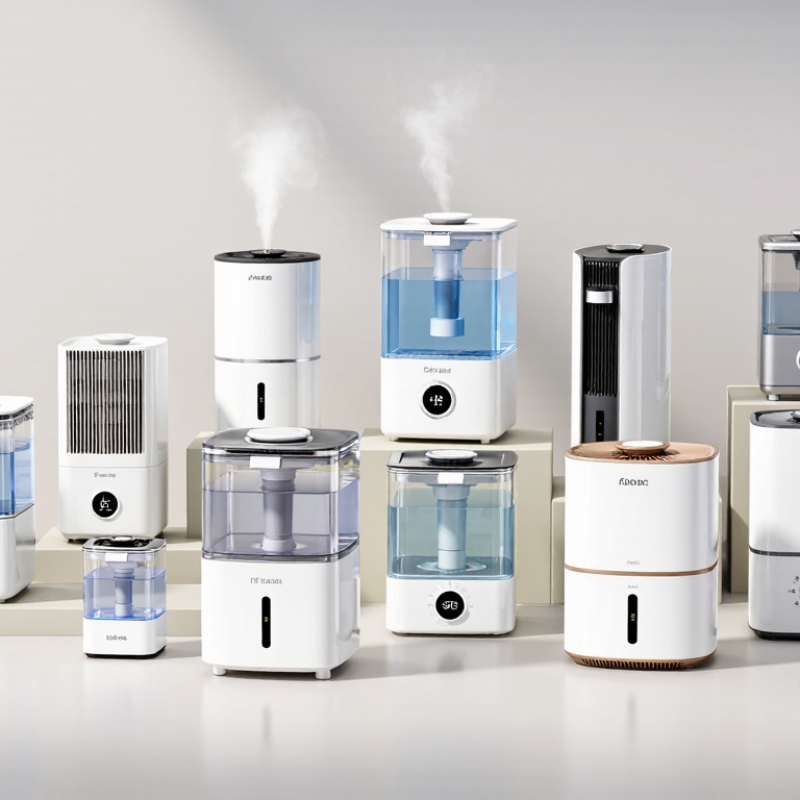
China Top 10 Air Mist Humidifier Manufacturers

Understanding Air Mist Humidifiers and Their Core Technologies

China Top 10 Air Mist Humidifier Manufacturers

Understanding Air Mist Humidifiers and Their Core Technologies

Air mist humidifiers add moisture through different mechanisms. Ultrasonic models vibrate water into fine droplets, often producing a visible plume above the outlet. Evaporative units draw air through a damp wick; a fan then disperses moisture without visible mist. Warm-mist designs heat water before release, but require extra care around hot surfaces. Each approach has trade-offs in noise, energy use, cleaning, and mineral residue. There is no single best technology for every room.

Humidity control matters as much as mist output. The US Environmental Protection Agency advises keeping indoor relative humidity below 60%, ideally between 30% and 50%. A built-in sensor can help, though its reading may differ from conditions across the room. Hard water can leave white dust with ultrasonic devices, so use water recommended by the manufacturer and clean the tank regularly. Small details make a difference.

China’s Air Mist Humidifier Manufacturing Landscape

China Top 10 Air Mist Humidifier Manufacturers

China’s Air Mist Humidifier Manufacturing Landscape

China’s manufacturing network brings together component suppliers, assembly workshops, tooling firms, and export service providers. Production clusters can offer ready access to molded plastics, fans, sensors, and packaging. This proximity may shorten sourcing cycles, but it does not guarantee consistent quality. Factory capabilities vary widely.

For buyers, compare engineering support as well as unit price. Ask how manufacturers test mist output, leakage, electrical safety, noise, and long-run operation. Request recent inspection records and samples from the intended production line. A polished sample is useful, but batch consistency matters more. Supply chains can shift. Verify component substitutions before production and agree on measurable acceptance criteria. Smaller suppliers may be flexible, yet their testing resources and documentation can be uneven. That deserves a closer look.

Tips: Check reservoir materials, cleaning access, and replacement-part availability. Ask for test results under stated room conditions; output can change with temperature and airflow. Keep questions specific. It saves time.

Criteria for Evaluating Air Mist Humidifier Manufacturers

Evaluating China-based air mist humidifier manufacturers should start with reproducible performance, not brochure claims. Grand View Research valued the global humidifier market at USD 3.1 billion in 2023 and projected 6.0% annual growth through 2030 in its Humidifier Market Size, Share & Trends Analysis Report. Growth expands supplier choice, but does not prove quality. Request output tests at stated room conditions, noise readings, power consumption, and tank-empty shutoff results. Compare methods with ANSI/AHAM HU-1 where applicable. Small details matter.

Next, examine water handling and safety. The U.S. EPA recommends keeping indoor relative humidity between 30% and 50%. Ask whether controls can maintain this range without leaving nearby surfaces damp. EPA guidance also recommends regular cleaning and low-mineral water for ultrasonic units. Inspect removable tanks, accessible seams, and clear cleaning instructions. Request third-party electrical test reports, batch inspection records, and traceable component changes—not just a certificate image. Check recent audit samples, defect data, warranty response times, and spare-part availability. No scorecard is perfect. A supplier may perform well in a lab yet develop tank leaks after months of use. Long-term field feedback helps, though it is imperfect evidence.

Profiles of China’s Top 10 Air Mist Humidifier Manufacturers

Profiles of China’s Top 10 Air Mist Humidifier Manufacturers

China’s air mist humidifier manufacturers serve varied needs, from compact bedroom units to larger models for offices and workshops. A useful profile looks beyond production scale. It checks product design, quality controls, customization options, and after-sales support. Some manufacturers focus on ultrasonic mist systems, while others offer multiple humidification technologies. Details matter. Buyers should verify tank capacity, mist output, noise levels, and cleaning access against published specifications.

The ten profiles are best compared through practical evidence, not promotional claims. Ask whether test reports apply to the exact model under consideration. Review sample inspection procedures, component sourcing, and packaging standards. For export projects, clarify production lead times and how defects are handled. A polished catalogue is not proof of consistent performance. Supplier capabilities can also vary between product lines, so request model-specific documentation. Rankings can be imperfect; a smaller factory may suit a tailored order better than a large supplier.

Tips: Run a sample unit for several hours. Check for leaks, uneven mist, and awkward tank removal. Confirm replacement-part availability before placing a bulk order.

Comparing Product Capabilities, Certifications, and Export Markets

For a China top-10 comparison, product capability should mean more than mist output. Check tank capacity, output settings, noise, leakage controls, and whether cleaning parts are easy to remove. Ask for test reports covering continuous operation and water-leak performance. Details matter. A mist unit running beside a bed should not produce distracting noise or leave damp marks on a nightstand.

Grand View Research estimated the global humidifier market at USD 2.30 billion in 2023, with projected growth of 5.5% annually from 2024 to 2030. This is a market estimate, not proof that every supplier has equal export readiness. Compare quality systems such as ISO 9001 separately from product-market requirements. Depending on destination, buyers may need evidence for CE or UKCA marking, electromagnetic compatibility, and restricted-substance controls. Confirm the exact model and test scope; a certificate for one product may not cover another. Ask manufacturers to name their main export regions and provide redacted shipment records, local-language manuals, and spare-parts plans. One gap remains: public data rarely separates air-mist humidifiers from other humidifier types. Treat broad market figures as context, not a purchasing forecast.

China Top 10 Air Mist Humidifier Manufacturers - Comparing Product Capabilities, Certifications, and Export Markets
Anonymous Entry Product Capabilities Certifications Export Markets Verification Status
Manufacturer 1Not providedNot providedNot providedCompany-specific information requires verification
Manufacturer 2Not providedNot providedNot providedCompany-specific information requires verification
Manufacturer 3Not providedNot providedNot providedCompany-specific information requires verification
Manufacturer 4Not providedNot providedNot providedCompany-specific information requires verification
Manufacturer 5Not providedNot providedNot providedCompany-specific information requires verification
Manufacturer 6Not providedNot providedNot providedCompany-specific information requires verification
Manufacturer 7Not providedNot providedNot providedCompany-specific information requires verification
Manufacturer 8Not providedNot providedNot providedCompany-specific information requires verification
Manufacturer 9Not providedNot providedNot providedCompany-specific information requires verification
Manufacturer 10Not providedNot providedNot providedCompany-specific information requires verification

No source material was supplied to substantiate a manufacturer ranking or company-specific product, certification, and export claims. Entries are therefore left unpopulated rather than presenting unverified information as fact.