




Blog

What Are the Top Science Museum Exhibit Types for 2026?

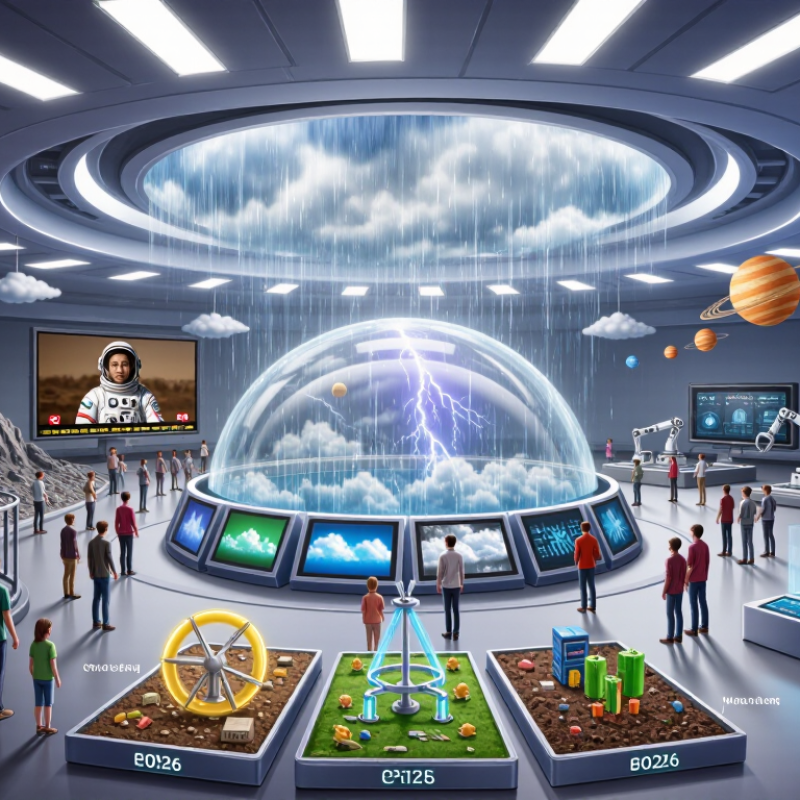
Science Museum Exhibits are changing as visitors seek hands-on learning, credible evidence, and memorable experiences. In 2026, leading museums are expected to combine interactive technology with carefully tested scientific explanations. Immersive climate galleries may place visitors inside a simulated storm, while health exhibits could reveal how organs respond through transparent digital models. Space displays may pair lunar rock replicas with real mission data and astronaut interviews. The strongest exhibits will not simply impress people. They will help visitors ask better questions.

This overview examines the top exhibit types shaping science museums in 2026. It considers immersive environments, live demonstrations, artificial intelligence galleries, sustainability installations, and accessible family learning zones. Each category offers different educational value. Interactive systems can increase curiosity, but excessive screens may distract from physical evidence. That weakness deserves attention. Museums should measure learning, not only visitor traffic or social media reactions. Expert review, visitor testing, and transparent sources can strengthen public trust. Small details matter, too: a working wind tunnel, a labeled soil sample, or a button that changes a coral reef simulation. These objects make complex ideas feel tangible. Yet no exhibit is perfect. Some explanations may simplify uncertain research too much, while others may overwhelm beginners. A reliable museum acknowledges those limits. This guide explores which formats balance wonder, accuracy, inclusion, and practical learning most effectively for the year ahead.
What Are the Top Science Museum Exhibit Types for 2026?

Defining Science Museum Exhibit Types in 2026

In 2026, science museum exhibit types are defined by visitor activity, not only by display technology. An object-based exhibit places specimens, instruments, or models at the center. Visitors study texture, scale, and evidence. A hands-on exhibit adds controlled actions, such as turning a valve or testing a bridge. These experiences make scientific processes visible. They also expose a weakness: interaction can become entertainment without careful interpretation.

Immersive exhibits use projection, sound, spatial design, or extended reality to explain systems that visitors cannot easily observe. Climate models and deep-space environments fit this type. However, immersive does not always mean educational. The American Alliance of Museums reported that digital engagement remains important for museum access, but online experiences cannot fully replace physical visits (AAM, 2023). Hybrid exhibits therefore connect a gallery activity with mobile data, remote participation, or downloadable experiments. The screen should support the specimen, not compete with it.

Participatory exhibits define visitors as contributors. They may record local observations, compare community data, or question an expert’s interpretation. This approach reflects UNESCO’s finding that museums expanded digital and community-based access after widespread closures, while many institutions faced uneven resources (UNESCO, 2021). Outdoor and living-system exhibits add another category, using gardens, weather stations, and ecological monitoring. They offer useful uncertainty. Measurements change. Visitors may disagree. That is scientifically honest. By 2026, the strongest exhibit types will likely combine clear evidence, physical discovery, inclusive participation, and room for doubt.

Interactive Exhibits for Hands-On Scientific Learning

What Are the Top Science Museum Exhibit Types for 2026?

Interactive Exhibits for Hands-On Scientific Learning

In 2026, hands-on exhibits will make scientific ideas visible, measurable, and personal. Visitors may build a small bridge, test its weight limit, and adjust the structure after failure. The result is immediate. This experience connects engineering principles with physical evidence, not memorized definitions.

Sensor-based exhibits can track motion, sound, temperature, or light. At a climate station, visitors might change surface colors and observe simulated heat absorption. Clear labels should identify the variables, measurement limits, and data sources. Museum educators can guide questions without controlling every answer. That balance supports curiosity and reliable learning.

Biology exhibits may use safe models, microscopes, and interactive anatomy displays. A visitor could compare plant cells, rotate a three-dimensional structure, or examine prepared samples. Accessible controls and multiple explanation levels help children, adults, and visitors with disabilities participate together.

Not every station works perfectly. A sensor may misread movement, or a busy screen may distract from the science. Those flaws deserve review. Exhibits should record feedback, test learning outcomes, and improve through repeated observation. Hands-on learning becomes stronger when visitors can question results, repeat an experiment, and understand why the evidence changes.

Immersive Digital and Extended Reality Exhibits

Immersive digital and extended reality exhibits will shape many science museums in 2026. Visitors can step inside a beating heart, adjust a virtual Mars rover, or watch molecules collide above a physical table. The Global Entertainment & Media Outlook 2024–2028 forecasts strong growth in virtual reality revenue through 2028. That momentum gives museums new tools for explaining invisible systems. Yet technology alone does not create learning. The exhibit must answer a clear scientific question.

Effective installations combine projection, spatial audio, motion tracking, and tactile controls. A visitor might rotate a digital fossil, then compare it with a real specimen nearby. This physical connection matters. In exhibit testing, users often remember actions better than passive screens. However, some visitors feel tired after prolonged headset use. Others need captions, seated access, or a non-digital route. A perfect immersive exhibit may not exist.

Tips: Keep each interaction short. Offer a clear starting point. Show real objects beside digital layers. Test brightness, sound levels, and accessibility with diverse visitors. Record where people hesitate; confusion is useful evidence. The 2024 Museum Digital Transformation Survey reports that staff capacity remains a major barrier to digital projects, so simple maintenance plans matter. Build content in replaceable modules, not one fragile spectacle. Review the science annually. Mistakes can survive longer than expected.

What Are the Top Science Museum Exhibit Types for 2026? - Immersive Digital and Extended Reality Exhibits

Exhibit Type Primary Technology Typical Visitor Capacity Typical Session Length Recommended Space Strongest Science Applications Accessibility and Inclusion Considerations Content Update Potential Operational Complexity
Immersive Projection Environment Multi-wall projection, spatial audio, motion tracking, and real-time visual content Approximately 4–12 visitors per session 5–15 minutes About 20–80 m², depending on the number of projection surfaces Space science, climate systems, ecosystems, geology, and large-scale physics Supports group participation and seated viewing; requires careful contrast, sound-level, and pathway planning High
Digital scenes can be replaced without rebuilding the physical enclosure
Medium–High
Virtual Reality Simulation Head-mounted display, tracked controllers, spatial audio, and interactive 3D software Usually 1 visitor per station 3–10 minutes About 10–40 m² for several stations plus supervision space Human anatomy, engineering, molecular science, hazardous environments, and historical scientific sites Requires seated or standing alternatives, adjustable text and audio, hygiene procedures, and options for visitors who experience motion discomfort High
Software scenarios can be revised or expanded
High
Augmented Reality Overlay Tablet, smartphone, or see-through display that places digital information over physical objects 1–6 visitors per interaction area 5–15 minutes About 5–25 m², depending on the exhibit footprint Fossils, specimens, machines, anatomy, archaeology, and hidden scientific processes Provide printed or screen-based alternatives, captions, adjustable font sizes, and clear navigation for visitors who cannot use handheld devices High
Annotations, languages, and interpretation layers can be updated digitally
Medium
Mixed Reality Spatial Interaction See-through display, spatial mapping, hand tracking, and digital objects anchored to the physical environment Usually 1–4 visitors per station 5–12 minutes About 10–30 m², including a safe interaction zone Engineering systems, robotics, medical visualization, planetary surfaces, and laboratory procedures Needs generous circulation space, clear physical boundaries, non-visual instructions, and alternative interaction methods High
Virtual objects and instructional layers can be reconfigured
High
360-Degree Dome Theatre Dome projection, surround sound, astronomical visualization, and narrated audiovisual programs Approximately 20–100+ visitors, based on seating capacity 10–25 minutes About 50–250 m², including seating, projection equipment, and circulation Astronomy, Earth observation, atmospheric science, oceanography, and environmental change Works well for group audiences; provide accessible seating, captions, audio description, and content warnings for intense motion or darkness High
Programs can be exchanged while retaining the same venue
High
Interactive 3D Model and Touch Table Large-format touchscreen, interactive maps, layered 3D models, and visual data interfaces Approximately 2–8 visitors per table 3–12 minutes About 6–20 m² per installation Human body systems, maps, biodiversity, energy networks, materials science, and data literacy Can support multilingual text, captions, tactile replicas, keyboard alternatives, and adjustable interface sizes High
Data layers and explanatory content can be revised efficiently
Medium
Gesture and Body-Movement Exhibit Depth cameras, motion sensors, projection, and gesture-responsive software Approximately 1–10 visitors 2–8 minutes About 12–35 m² for movement and queue space Biomechanics, force and motion, wave behavior, ecology, and systems thinking Include seated, low-movement, and controller-based alternatives; avoid requiring a single body position or range of motion High
Rules, visual responses, and scientific scenarios can be modified in software
Medium–High
Real-Time Scientific Data Visualization Live or frequently updated datasets, large displays, dashboards, simulation models, and interactive graphics Approximately 2–20 visitors, depending on screen layout 3–10 minutes About 8–40 m² Weather, earthquakes, biodiversity, public health, energy use, transportation, and climate indicators Use color palettes suitable for color-vision differences, text equivalents, screen-reader-compatible controls, and clear explanations of uncertainty Very High
Feeds, models, and explanatory layers can be updated continuously
High
Digital Twin and Scenario Simulator Interactive model of a physical system with adjustable variables, simulation software, and visual feedback Approximately 2–12 visitors 5–20 minutes About 15–60 m² Urban planning, water management, renewable energy, transportation, disaster resilience, and industrial processes Offer guided and self-directed modes, plain-language explanations, multiple input methods, and clear distinctions between measured data and model assumptions Very High
Parameters, scenarios, and datasets can be expanded over time
High
Immersive Audio and Spatial Storytelling Directional speakers, headphones, location-based audio, and synchronized visual or tactile cues Approximately 1–30 visitors 5–15 minutes About 8–40 m² Field research, animal communication, environmental monitoring, medical experiences, and scientific history Provide transcripts, captions where visual media are used, volume controls, quiet alternatives, and hearing-loop or equivalent assistive listening support High
Narratives, languages, and sound layers can be revised digitally
Low–Medium

Planning ranges are indicative rather than universal specifications. Actual capacity, session length, floor area, accessibility provisions, and operating requirements depend on the exhibit design, local safety rules, hardware configuration, content complexity, and visitor-flow strategy.

Climate, Space, and Future Technology Exhibits

What Are the Top Science Museum Exhibit Types for 2026?

Climate Exhibits

Climate exhibits should move beyond dramatic melting-ice displays. The World Meteorological Organization reported that 2023 was the warmest year recorded, about 1.45°C above the pre-industrial average. Visitors need to feel that change through local evidence. A useful exhibit could show a flood map, a heat sensor, and a family’s weekly energy use. Interactive choices should reveal trade-offs between comfort, cost, and emissions. The science must remain clear. Simplification can become misleading.

Space Exhibits

Space exhibits will benefit from real-time data and human-scale stories. The United Nations reports that thousands of satellites now support communication, weather monitoring, navigation, and research. A dark gallery could display changing orbital paths above a glowing Earth. Visitors might adjust altitude and observe collision risks. That idea sounds simple, but orbital mechanics are difficult to explain without creating false certainty. Curators should admit where models have limits.

Future Technology Exhibits

Future technology exhibits should connect invention with consequences. The International Energy Agency’s Energy Technology Perspectives 2024 projects that markets for key clean-energy technologies could exceed 2 trillion dollars by 2035 under current policy settings. Exhibits could let visitors compare batteries, heat pumps, power grids, and material demands. Include failed prototypes. They make engineering feel honest. A polished future can feel like advertising, not education.

Inclusive, Sustainable, and Community-Centered Exhibits

What Are the Top Science Museum Exhibit Types for 2026?

Inclusive, Sustainable, and Community-Centered Exhibits

In 2026, leading science museums may create exhibits that feel like shared neighborhood spaces. Visitors could test clean-water filters, compare air readings, and map local heat zones. Small details matter. Labels should use plain language, translations, captions, tactile diagrams, and adjustable sound levels. These choices support visitors with disabilities, children, older adults, and people learning the local language.

Sustainability should appear in an exhibit’s structure, not only in its message. Modular walls, repairable components, low-energy lighting, and recycled materials can reduce waste. A working energy dashboard could show today’s electricity use beside yesterday’s. That evidence makes environmental claims easier to trust.

Community-centered design also requires paid local advisors, not occasional consultations. Residents can identify important questions about flooding, food access, or safe public transport. Their knowledge may challenge a curator’s original plan.

That challenge is useful. An exhibit might fail when it assumes every visitor has internet access, free time, or scientific confidence. Museum teams should observe real visitor behavior, invite criticism, and revise confusing sections. A pilot display can reveal problems that polished planning misses. However, participation must not become decoration. Names, decisions, and changes should remain visible to contributors. One unanswered question may stay on the wall, inviting the community to return and examine it together.